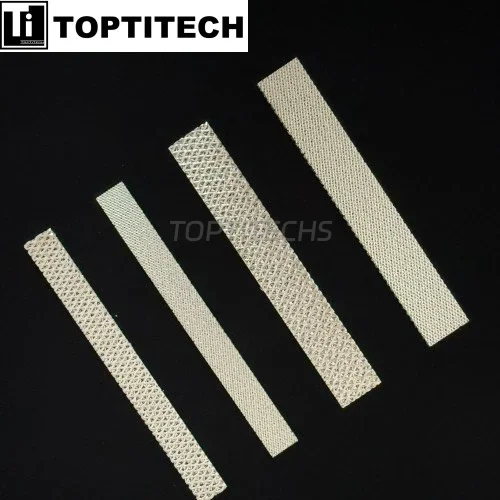
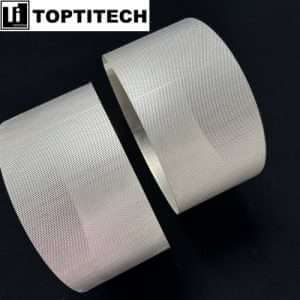
10 mm Thick Sintered SS316L Multilayer Filter Mesh
10 mm thick sintered SS316L multilayer filter mesh for high-strength filtration. Rigid structure, high permeability, corrosion resistant.
Products Specifications
| Material | SS 316L | |||
| Diameter | 100mm | |||
| Thickness | 10mm | |||
| Pore Size/Filtration grade | 50um | |||
| Technique | Sintering | |||
Overview of Sintered SS316L Multilayer Filter Mesh
The sintered SS316L multilayer filter mesh represents a significant advancement in industrial filtration technology, combining the corrosion resistance of 316L stainless steel with a precision-engineered laminated architecture. At 10mm thickness, this product delivers exceptional mechanical strength and filtration accuracy that single-layer mesh alternatives cannot match. The sintered SS316L multilayer filter mesh is manufactured by stacking multiple woven wire mesh layers of progressively finer pore sizes, then bonding them through a vacuum sintering process that creates metallurgical joints between each layer without the need for binders or adhesives.
This sintered SS316L multilayer filter mesh is designed for demanding operating environments where high differential pressure, elevated temperatures, and aggressive chemical media converge. Typical applications include polymer melt filtration, high-pressure gas sparging, catalyst recovery in petrochemical reactors, and hydraulic system protection. The 10mm thickness provides the structural mass necessary to withstand pressure drops exceeding 30 bar without deformation, making this sintered SS316L multilayer filter mesh a reliable choice for critical process equipment where filter failure would cause costly downtime.
Multilayer Lamination of Sintered SS316L Multilayer Filter Mesh
The multilayer lamination architecture of the sintered SS316L multilayer filter mesh is what distinguishes it from conventional filter media. Each element consists of five to seven distinct wire mesh layers arranged in a carefully calculated sequence. The outermost layers serve as protective screens and structural support, while the inner layers progressively narrow the effective pore size, creating a depth-filtration gradient that traps particles throughout the cross-section rather than solely on the surface. This graded-density design of the sintered SS316L multilayer filter mesh dramatically increases dirt-holding capacity and extends service intervals compared to single-layer screens of equivalent rating.
The sintering process fuses each wire intersection point across all layers, transforming a stack of individual meshes into a monolithic sintered SS316L multilayer filter mesh. The interstitial voids between layers form interconnected tortuous flow paths that enhance particle capture efficiency while maintaining acceptable permeability. By varying the mesh count, wire diameter, and stacking sequence, TOPTITECHS engineers can tune the sintered SS316L multilayer filter mesh to achieve absolute filtration ratings from 1 micron to 200 microns, all within the same 10mm overall thickness envelope.
Manufacturing of Sintered SS316L Multilayer Filter Mesh
Manufacturing the sintered SS316L multilayer filter mesh demands rigorous process control from raw material selection through final inspection. The process begins with sourcing certified SS316L wire that meets ASTM A580 specifications, with carbon content strictly limited below 0.03% to preserve intergranular corrosion resistance after high-temperature sintering. Each mesh layer is precision-woven on CNC looms that maintain wire tension and aperture uniformity to tolerances within ±2% of nominal opening size.
The woven layers are cut to size, stacked in the designed sequence, and placed between flat graphite platens inside a vacuum sintering furnace. The furnace evacuates to below 10⁻³ Pa before ramping to sintering temperature, typically 1100°C to 1200°C, where atomic diffusion bonds form at every wire-to-wire contact point. This solid-state bonding mechanism produces a sintered SS316L multilayer filter mesh free from braze alloys or flux residues that could leach into process streams. Post-sintering, each sintered SS316L multilayer filter mesh undergoes flattening calibration and edge machining to ensure dimensional accuracy across the finished sheet or disc.
High-Pressure Applications of Sintered SS316L Multilayer Filter Mesh
The 10mm-thick sintered SS316L multilayer filter mesh excels in high-pressure filtration scenarios where thinner media would rupture or collapse. In polymer filtration, the sintered SS316L multilayer filter mesh withstands melt pressures exceeding 250 bar during extrusion of engineering thermoplastics, reliably capturing gel particles and degraded polymer fragments that would otherwise create defects in films, fibers, and injection-molded parts. The uniform load distribution across the multilayer structure prevents localized stress concentrations that cause premature failure in single-layer screens.
In gas distribution and fluidization systems, the sintered SS316L multilayer filter mesh functions as both a flow-control medium and a structural component. Hydrogen reformers, ammonia crackers, and FCC catalyst strippers all benefit from the combination of mechanical robustness and precise permeability that this sintered SS316L multilayer filter mesh provides. The flat, rigid geometry ensures consistent gap dimensions between the filter and mating components, eliminating bypass leakage paths that compromise separation efficiency in critical high-pressure gas service.
Structural Integrity of Sintered SS316L Multilayer Filter Mesh
Structural integrity is a defining characteristic of the sintered SS316L multilayer filter mesh. The metallurgical bonds created during vacuum sintering give the laminated assembly a flexural strength that approaches that of solid SS316L plate, despite the porous internal structure. Burst pressure testing of finished elements consistently demonstrates failure thresholds more than three times higher than rated maximum operating pressures. The sintered SS316L multilayer filter mesh maintains this structural performance across a broad temperature window from cryogenic conditions up to 480°C, where the 316L alloy retains approximately 70% of its room-temperature yield strength.
Thermal cycling resistance is another critical attribute. Unlike epoxy-bonded or mechanically clamped mesh assemblies that delaminate under repeated expansion and contraction, the sintered SS316L multilayer filter mesh absorbs thermal stresses through the identical coefficient of thermal expansion shared by every layer. This metallurgical homogeneity of the sintered SS316L multilayer filter mesh eliminates differential expansion as a failure mode, ensuring reliable performance through years of process temperature swings and clean-in-place cycles.
Quality Control for Sintered SS316L Multilayer Filter Mesh
TOPTITECHS applies a comprehensive quality control regimen to every sintered SS316L multilayer filter mesh produced. Incoming SS316L wire is verified by optical emission spectrometry to confirm alloy composition and by tensile testing to validate mechanical properties. In-process inspections monitor mesh weave quality, layer alignment during stacking, and vacuum furnace temperature uniformity through distributed thermocouple arrays. Each completed sintered SS316L multilayer filter mesh undergoes bubble-point testing per ISO 4003 to quantify the maximum pore size and confirm that the effective filtration rating matches the specification.
Additional quality assurance measures for the sintered SS316L multilayer filter mesh include helium leak testing for critical service elements, dimensional inspection using coordinate measuring machines, and surface profilometry to verify flatness within 0.1mm per 100mm of diagonal. Certificates of analysis documenting chemical composition, mechanical properties, and filtration performance accompany every shipment, providing full traceability back to the original SS316L coil heat numbers.
Customization of Sintered SS316L Multilayer Filter Mesh
Customization capability makes the sintered SS316L multilayer filter mesh adaptable to diverse equipment configurations and process requirements. TOPTITECHS offers this sintered SS316L multilayer filter mesh in disc, plate, tube, and custom-cut shapes up to 1200mm in diameter or diagonal. Edge treatments include plain sheared, welded perimeter, and solid-frame bonding for integration into plate-and-frame filter presses and candle filter assemblies. Customer-specified layer counts, pore-size gradations, and outer-layer mesh configurations allow the sintered SS316L multilayer filter mesh to be optimized for specific combinations of flow rate, retention rating, and backwash recovery.
Surface modifications extend the versatility of the sintered SS316L multilayer filter mesh further. Electropolishing reduces surface roughness to below Ra 0.4µm for pharmaceutical and food-contact applications where cleanability and biofilm resistance are paramount. Passivation treatments restore the full chromium oxide passive layer after machining, maximizing corrosion resistance in chloride-containing environments. For polymer melt service, optional chrome-plating of the upstream face reduces adhesion and facilitates screen-pack changes. TOPTITECHS engineering teams collaborate directly with customers to develop custom sintered SS316L multilayer filter mesh solutions that integrate seamlessly with existing filtration hardware and process parameters. For complementary products, see our SS316L wire mesh and browse the full metal mesh range.
Related Products
Related products

- Metal Mesh
Porous Titanium Tube